Author • Educator • Investigator of the Dark Psyche
Jake Vogel Miller
“The most dangerous corridors are the ones inside the mind.”
Featured Work
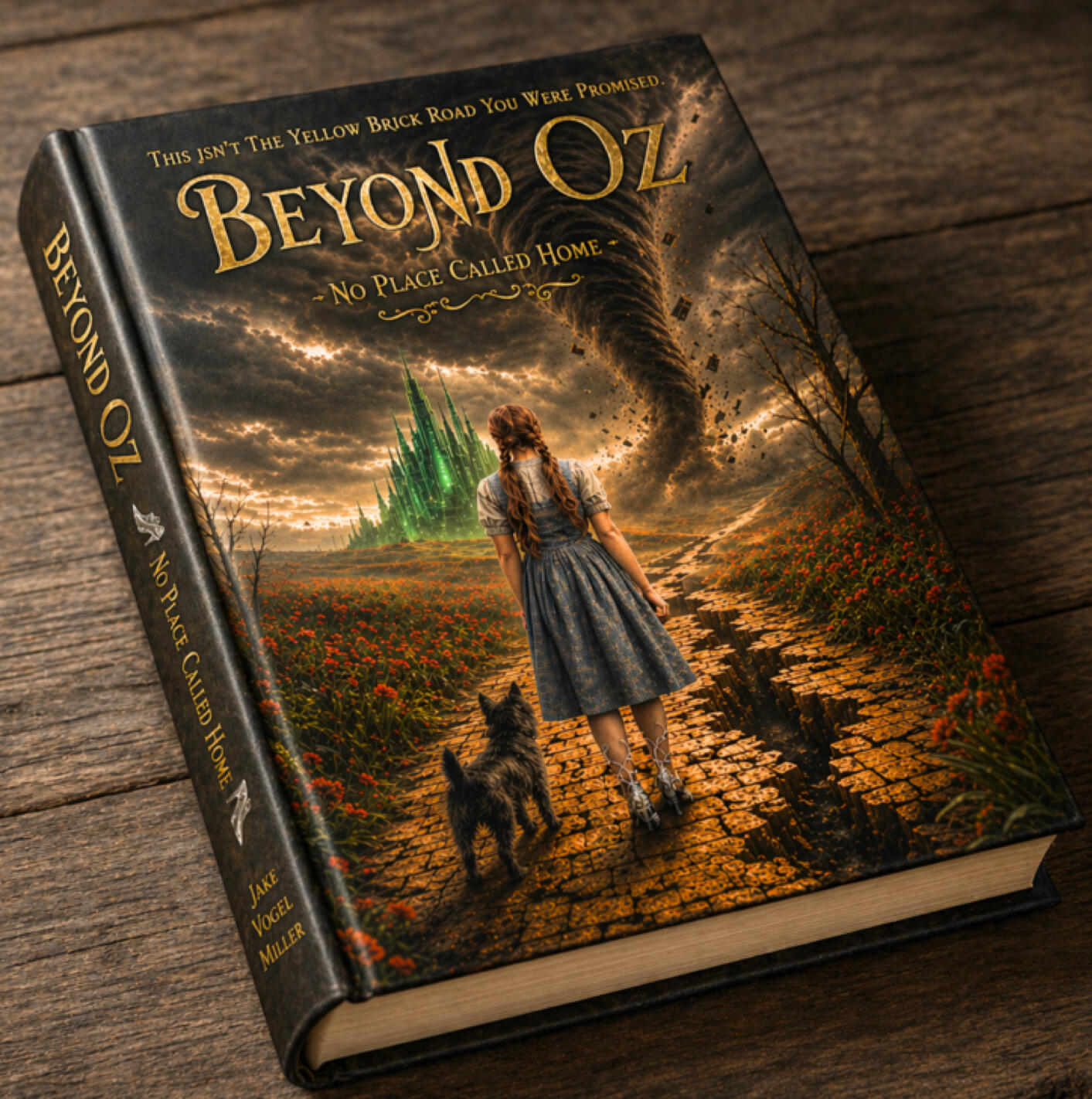
Beyond Oz: No Place Called Home
Coming Soon
A road that once promised salvation now leads only to ruin. When a zealot from Dorothy Gale’s past arrives in Oz to finish what she “failed” to do, the fragile balance holding the land together begins to collapse, cracking the Yellow Brick Road, unraveling magic, and awakening something far worse than wickedness. As the world fractures around her, Dorothy must face the terrifying truth: the greatest threat to Oz isn’t evil… It’s the belief that it can be saved.
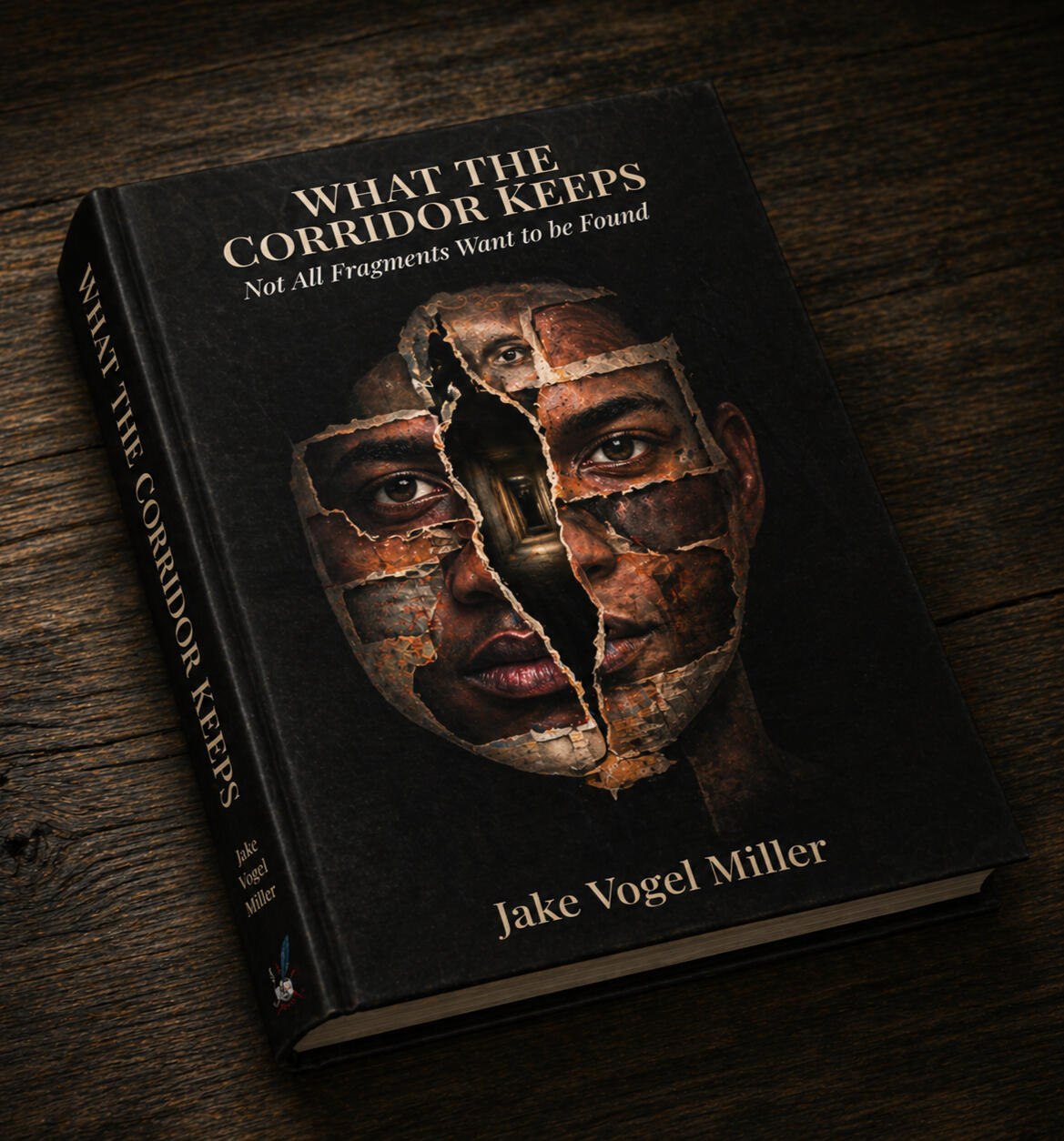
What the Corridor Keeps
Coming Soon
The mind does not break all at once. It adjusts, in ways that feel invisible, rerouting thought, softening edges, dimming what it cannot safely hold. Over time, it begins to build quiet corridors, places where difficult truths can be contained without being confronted directly. These spaces are shaped by instinct and necessity, designed to keep a person moving forward. What is hidden does not disappear; it lingers just out of reach, influencing perception, shaping behavior, and waiting patiently for the moment it can no longer remain contained.

Why This Story?
What the Corridor Keeps began as a question about memory. Not just what we remember, but what the mind chooses not to remember, and why.I have always been fascinated by the strange relationship between protection and truth inside the human mind. Psychology teaches us that memory is not a perfect archive. It bends, reshapes itself, and sometimes hides things entirely. Gothic literature has long explored that same uncertainty, placing characters in environments where perception cannot be fully trusted.My fascination is not purely academic. Like many people, I have spent much of my life navigating my own encounters with the darker terrain of the mind. Those experiences did not inspire the story directly, but they sharpened my curiosity about how the mind protects itself, how memory reshapes experience, and how identity can feel stable one moment and uncertain the next.This novel grew out of that intersection. It is less interested in monsters than in the quiet moment when someone begins to realize that something important may have been missing from their own memory all along.

Why This Story?
Stories about Oz have always carried an unspoken promise: that no matter how strange the journey becomes, there is still a place at the end of it that will make sense of everything. A place that feels like it was always yours, "Home".This novel brings a new reality to that promise.I found myself drawn not to the road itself, but to what happens when it stops working. When the path fractures, the rules no longer work, and the idea of “home” begins to feel less like a destination and more like something uncertain and unreachable.Oz, for all its color and wonder, rests on a kind of hidden order. Good and evil are meant to be legible. Journeys are meant to resolve. When that structure collapses, what remains is not chaos for its own sake, but something more recognizable: people trying to make sense of a world that no longer explains itself.This story grew from that unraveling. It is not simply a darker retelling, but an exploration of what follows when certainty hardens into doctrine, when belonging becomes conditional, and “home” is reshaped into something that can be withheld, or lost entirely.At its core, this novel is less about Oz as a place and more about what survives after it fails. It lives in the tension between comfort and truth, nostalgia and reality, and in the difficult question of what it means to keep moving forward when there is no clear way back.

The Mind Behind the Stories
Jake Vogel Miller writes psychological fiction that explores the fragile architecture of memory and the uneasy space between truth and perception.His study of psychology at both the undergraduate and graduate level sparked a lasting fascination with the darker corners of the mind, one that now shapes the stories he tells.He is currently pursuing a Master of Fine Arts in Fictional Creative Writing at Concordia Saint Paul University, continuing to develop work that sits at the intersection of memory, identity, and psychological fracture.His debut novel, What the Corridor Keeps, grows from this focus, examining what happens when memory begins to break apart and the mind can no longer contain what it tried to hide.Jake teaches English to middle school students, encouraging them to become curious seekers who question the stories they read, the histories they inherit, and the assumptions behind them.He believes the most unsettling stories are not the ones filled with monsters, but the ones that quietly ask what the mind buries and what surfaces when it can no longer be contained.

